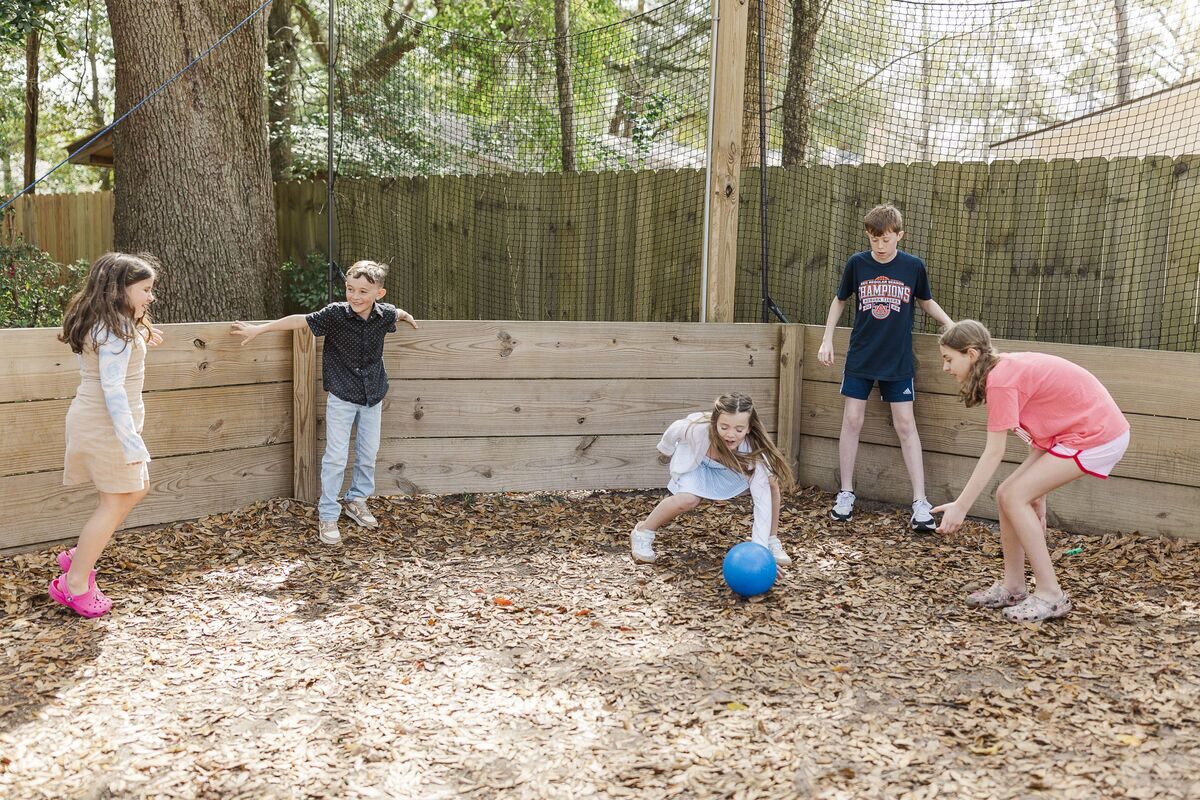
We've never cut recess. Not once in all our years of running camps. Not when schedules got tight, not when parents asked why we were "wasting time," not when the weather was questionable. It is not optional. It is not a reward. It is a non-negotiable part of every STEAMCamp session, and the science fully backs us up.
What Happens to the Brain During Movement
Exercise increases blood flow to the brain, including to the prefrontal cortex — the region responsible for executive function, attention, and problem-solving. It also triggers the release of BDNF (Brain-Derived Neurotrophic Factor), sometimes called "Miracle-Gro for the brain," which promotes the growth of new neural connections.
In practical terms: a child who runs around for 15 minutes before a challenging task will perform better on that task than a child who sat still for those same 15 minutes. This isn't opinion. It's been replicated in study after study.
What Unstructured Play Specifically Develops
There's a difference between scheduled PE and genuine free play. Both have benefits, but unstructured outdoor time develops something more specific: the ability to self-regulate, negotiate social dynamics, take initiative, and manage boredom creatively. These are exactly the skills children need to succeed in open-ended STEAM challenges.
- Self-regulation: Children who play freely learn to manage their own emotions and transitions without constant adult prompting
- Negotiation: Deciding the rules of an outdoor game is social engineering at its finest
- Risk tolerance: Climbing, running, and physical challenge build a healthy relationship with the possibility of failure
- Intrinsic motivation: Children who play by their own rules develop internal drive — which is exactly what we need when we ask them to tackle problems with no preset solution
"Every study I've ever read on childhood learning comes to the same conclusion: kids need to move. The camps that cut recess to fit in more instruction are optimizing for the wrong thing." — Lindsey, STEAMCamp Founder
Our Outdoor Activities Are Science Too
What we do outdoors at STEAMCamp isn't a break from learning — it often is the learning. Our outdoor challenges include nature scavenger hunts that build observational science skills, relay challenges that involve simple machines and strategy, and engineering activities that use only natural materials found on site.
We've had breakthroughs happen outside. Kids who were stuck on a design problem inside, who went out for a relay race, came back and immediately saw the solution. The movement did something their sitting couldn't.
The Bigger Picture
We believe deeply that children deserve a childhood — not just an early career. The pressure on kids today to perform, achieve, and accelerate is real, and it's doing damage. Screen time has replaced free play. Academic drilling has replaced exploration. The data on childhood anxiety, depression, and disengagement from school is alarming.
Recess isn't a luxury. For many children today, an outdoor break at STEAMCamp may be more outdoor unstructured time than they get all week. That matters. We're not apologizing for protecting it.