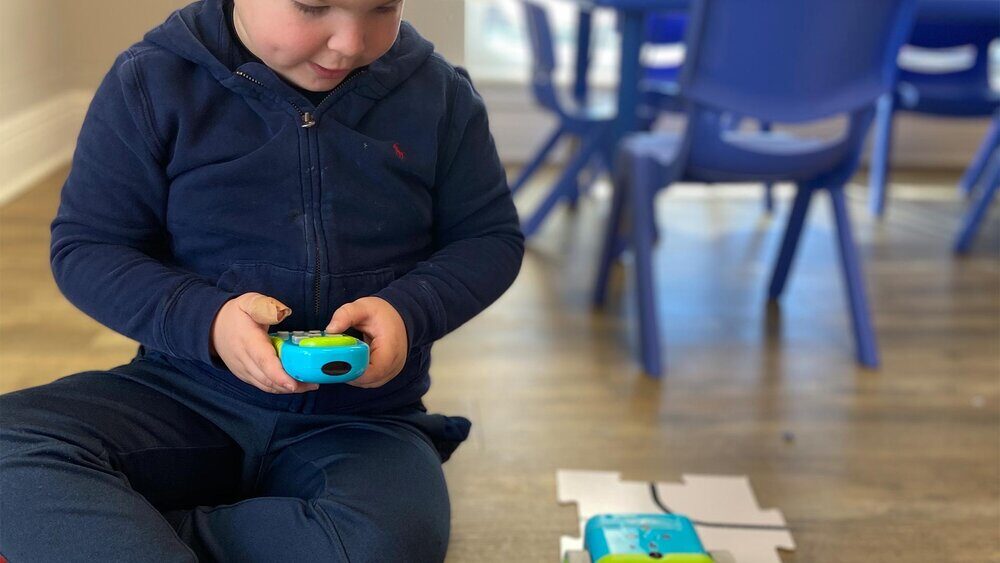
Every summer, parents drop their kids off at our Robotics Camp with roughly the same expectation: "They'll learn to code." And while coding is absolutely part of the experience, it's only a fraction of what children walk away with after four days of building, debugging, and laughing their way through challenges they've never attempted before.
After years of running hands-on STEAM programs, we've watched hundreds of kids transform over the course of a single week. Here's what's actually happening beneath the surface.
1. They Learn to Think Like Engineers
Engineering thinking isn't about being good at math. It's about breaking a big problem into smaller ones, testing a solution, watching it fail, figuring out why, and trying again. Every robot that doesn't move the way it's supposed to is a lesson in systematic troubleshooting — a skill that serves children in every subject and career imaginable.
At STEAMCamp Robotics, campers don't follow a script. They're given a goal — navigate an obstacle course, pick up an object, follow a colored line — and then they figure out how to make it happen. The struggle is intentional. So is the breakthrough.
2. Resilience Gets Built in Real Time
There's a particular moment we see every session: a child has been working on a build for two hours, it finally looks right, they press go — and it spins in circles instead of going forward. The room gets quiet. Then one of two things happens: the child shuts down, or the child leans in.
"My daughter came home on day two in tears. On day four she was the one helping other kids debug their programs. That turnaround is what I paid for." — STEAMCamp parent, Gulf Shores
Our instructors are trained to coach, not fix. They ask questions instead of giving answers. Over the course of the week, children learn that a broken robot isn't a failure — it's information. That mindset shift is profound.
3. Collaboration Becomes Natural
We structure our Robotics Camp in pairs and small teams deliberately. Kids who've never met have to agree on a design, divide responsibilities, give feedback on each other's code, and celebrate wins together. Those social dynamics — negotiating, advocating, compromising — can't be learned from a screen.
4. They Pick Up Real Coding Skills
Yes, they do actually code. Depending on the age group, campers work with block-based visual programming (perfect for younger beginners) or begin exploring text-based languages. By the end of the week most campers can:
- Write a sequence of commands to control robot movement
- Use loops and conditionals to create responsive behavior
- Debug basic logic errors in their programs
- Explain what their code does to someone who didn't write it
5. Confidence Shows Up on Day Four
We've heard it from hundreds of parents: "He came home different." The confidence that comes from solving a real problem — not a worksheet, not a test, but an actual physical robot that does something because of choices they made — is unlike any other kind of confidence. It's embodied. It sticks.
If your child is curious, loves to tinker, or has ever asked "how does that work?" — Robotics Camp is for them. No prior experience required. Just a willingness to try, fail, and try again.